

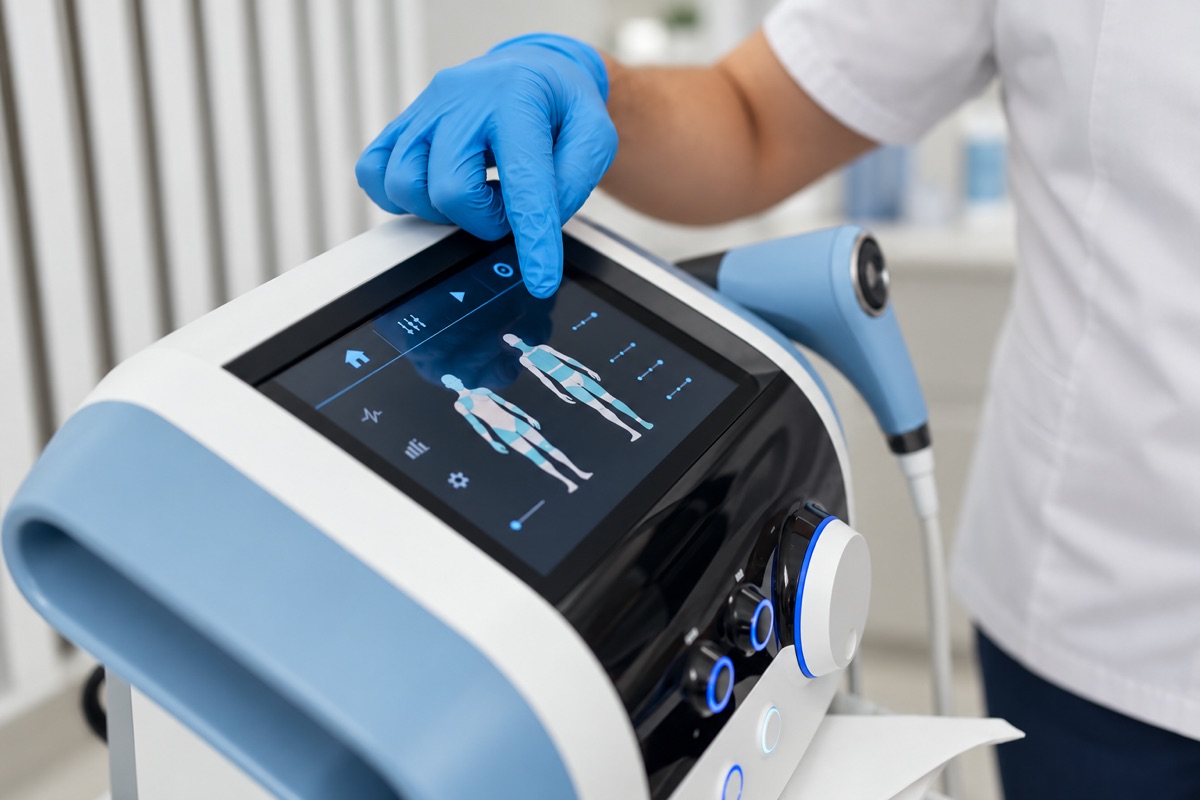
Shockwave Therapy in North Vancouver
Targeted treatment for persistent heel, tendon and soft-tissue pain.
If plantar fasciitis, Achilles pain, tennis elbow, shoulder tendinopathy or another stubborn musculoskeletal condition is limiting you, Shockwave Therapy may be an appropriate part of your rehabilitation program.
Conditions Commonly Treated With Shockwave Therapy
Plantar Fasciitis
Persistent heel pain, often worse with the first steps after rest or with prolonged walking and standing.
Achilles Tendinopathy
Pain and stiffness around the Achilles tendon during walking, running or exercise.
Tennis Elbow
Outer elbow pain associated with gripping, lifting and repetitive upper-limb activity.
Shoulder Tendinopathy
Persistent shoulder pain related to rotator cuff or other tendon-related conditions.
Patellar Tendinopathy
Patellar tendon pain associated with jumping, running, squatting or sport.
Gluteal Tendinopathy
Outer hip pain that may be aggravated by walking, stairs or lying on the affected side.
Shockwave Therapy for Plantar Fasciitis
Persistent heel pain can make walking, standing, work and exercise difficult. Shockwave Therapy may be considered as one component of a comprehensive physiotherapy program for persistent plantar heel pain.
At Zone 4, we can also assess factors that may contribute to symptoms, including:
- Foot and ankle mobility
- Calf flexibility and strength
- Foot biomechanics
- Walking and running mechanics
- Footwear and activity levels
- Need for custom orthotics when clinically appropriate
Want to See the Research Behind Shockwave Therapy?
Review our evidence summary on Shockwave Therapy for plantar fasciitis, including references to PubMed-indexed research.
What Happens During Your Appointment?
Assessment
We review your symptoms, history, activity level and functional limitations.
Examination
Movement, strength, mobility and relevant contributing factors are assessed.
Shockwave Treatment
If appropriate, controlled acoustic waves are applied to the targeted treatment area.
Rehabilitation
Your plan may include exercise, progressive loading, activity modification and other physiotherapy techniques.
More Than a Modality
Shockwave Therapy works best when it is used for the right clinical presentation and integrated into a broader rehabilitation plan.
- Experienced musculoskeletal physiotherapy care
- Individualized assessment and treatment planning
- Exercise-based rehabilitation when appropriate
- Access to IMS / dry needling, high-power laser, manual therapy and kinesiology
- Custom orthotics available when clinically appropriate
What Our Patients Say
 Posted on Google
 Mehrdad Banaei
Trustindex verifies that the original source of the review is Google.
Friendly staff and great service, highly recommended✌🏻Posted on Google JJ LynchVery professional and friendly staff. Helped me greatly in my recovery from lower back pain.Posted on Google
 Jalil MiripourI had a great experience with my physiotherapy sessions at Zone 4 Physiotherapy. The treatment was effective, and the staff was professional and supportive. Highly recommend!Posted on Google
 Dora ValentinePhysio and acupuncture helped so much! They made you feel comfortable and they cared. I also got orthotics and they are great!Posted on Google
 maryam mohammadiToday was my first cupping and laser therapy session for my back, and I’m truly amazed! Even though it was just the first session, I feel incredibly light, and the pain in my back and shoulders has significantly reduced. I am extremely grateful to Pooneh for being so professional and knowledgeable. She performed the treatment with great care and expertise, making the experience fantastic. I’m confident that after completing the sessions, I will achieve amazing results without any pain. This is an experience everyone should try. I thank Pooneh with all my heart!Posted on Google
 Mahlili BastakiOne of the best physiotherapy centers in Vancouver with excellent and expert physiotherapists. After fifteen physiotherapy sessions with an acute lumbar disc problem, I achieved the desired result.Posted on Google
 Stephanie BatesonGo see Ali the physiotherapist if you have plantar faciitis! He helped me so much with my foot pain.Posted on Google
 Andre SI have chronic pain on my upper back. My back is in bliss, i feel restored. Prior to getting a massage from Jordann, I felt like a fully rusted 1930s truck left in the desert. Now I feel like a pristine Rolls Royce. Will work with her again in the near future! Thanks Zone4.Posted on Google
 NuDerma Laser ClinicI had an amazing experience at Zone4 Physiotherapy! The staff is incredibly knowledgeable, professional, and friendly. From the moment I walked in, I felt welcomed and well taken care of. The physiotherapist took the time to understand my concerns and provided a personalized treatment plan that made a real difference. The clinic is clean, well-equipped, and has a great atmosphere. I highly recommend Zone4 Physiotherapy to anyone looking for effective and compassionate care!Posted on Google
 saeid shabZone 4 PHYSIOTHERAPY team is amazing! Maysam is very professional and good at her job. I would definitely recommend this place.
Shockwave Therapy Questions
Does Shockwave Therapy hurt?
You may feel some discomfort, particularly over sensitive areas. Treatment intensity can be adjusted based on your tolerance and clinical presentation.
How many sessions will I need?
The appropriate number of sessions depends on your condition, symptom duration, severity, response to treatment and overall rehabilitation plan. Your physiotherapist can provide a recommendation after assessment.
Do I need a doctor's referral?
A physician referral is generally not required to see a physiotherapist in British Columbia. Some extended-health plans may still require one for reimbursement.
Is Shockwave Therapy covered by extended health insurance?
When provided as part of a physiotherapy visit, reimbursement may be available through physiotherapy benefits depending on your individual policy. Check with your insurer if you are unsure.
Can Shockwave Therapy be combined with exercise?
Yes. For many tendon-related conditions, strengthening and progressive loading are important parts of rehabilitation. Shockwave Therapy may be incorporated alongside those strategies when clinically appropriate.
Is Shockwave Therapy appropriate for everyone?
No. Shockwave Therapy has precautions and contraindications. Your physiotherapist will review your health history and treatment area before recommending it.
Find Out if Shockwave Therapy Is Right for You
Book an assessment at Zone 4 Physiotherapy & Wellness Centre in North Vancouver.