

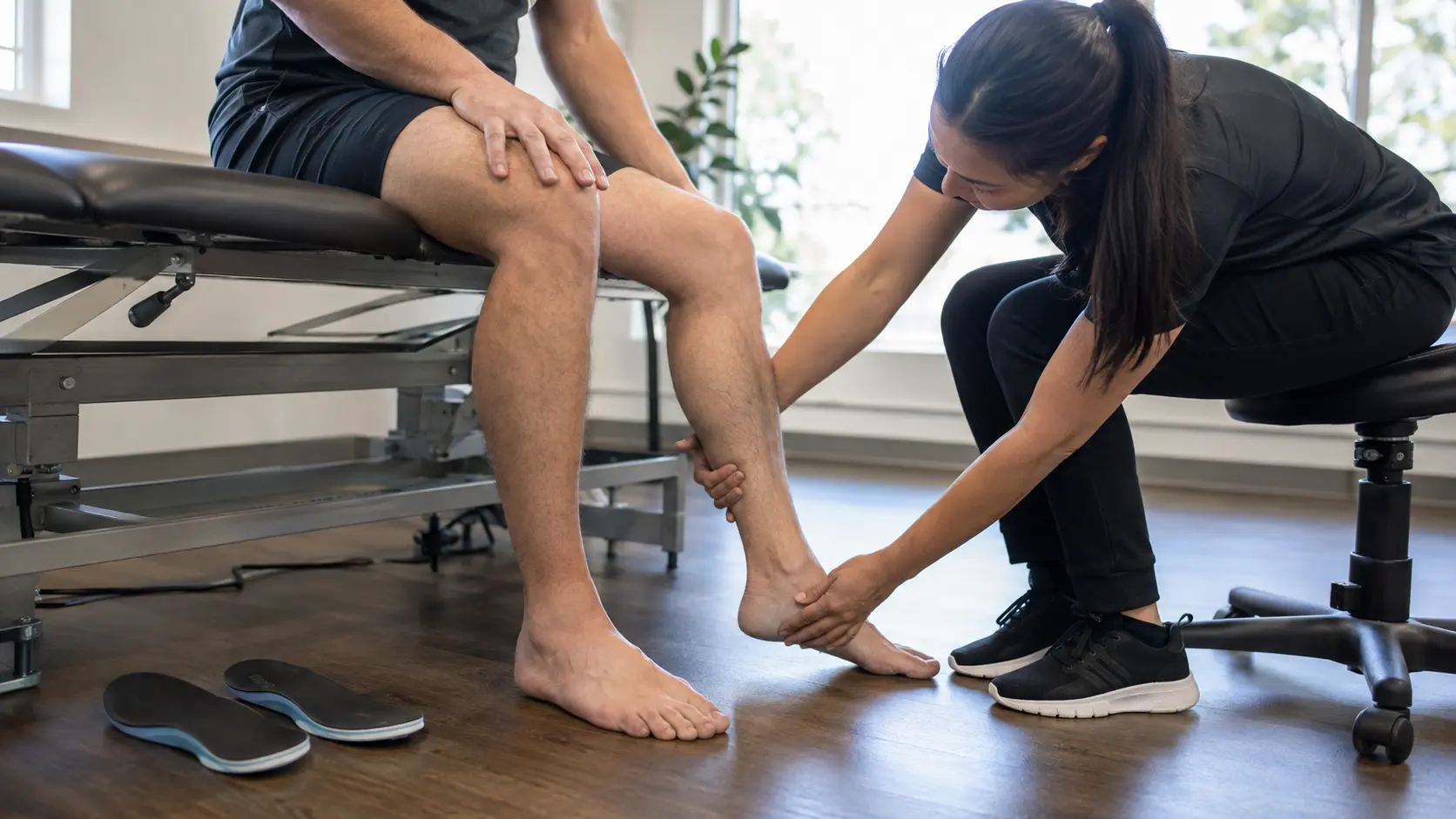
Custom Orthotics in North Vancouver
Our team provides custom orthotics in North Vancouver based on your foot mechanics, walking pattern, footwear, activity level, and symptoms. A detailed assessment helps us understand what may be contributing to your discomfort and whether custom orthotics are right for you.
If recommended, your orthotics are made specifically for your feet and designed to provide support during everyday activities, work, exercise, or sport.
What Are Custom Orthotics?
Custom orthotics are inserts worn inside your shoes to provide support, cushioning, or changes in how pressure is distributed through the foot.
Unlike over-the-counter insoles, custom orthotics are selected or made based on an individual assessment.
They may be considered when foot mechanics, pressure, or repeated loading are contributing to discomfort during walking, standing, work, or physical activity.
Orthotics do not permanently change the structure of your foot, and they are not the right solution for every type of pain. The first step is understanding what is causing your symptoms and whether additional support is likely to help.
When Might Orthotics Be Worth Considering?
People consider orthotics for different reasons. Some have pain in a specific part of the foot, while others notice discomfort during long periods of standing, walking, running, or sport.
An assessment may be useful if you are dealing with:
- ✔Uneven shoe wear
- ✔Heel or arch discomfort
- ✔Forefoot pressure or pain
- ✔Changes in walking after an injury
- ✔Foot or ankle discomfort during sports
- ✔Foot fatigue during long periods of standing
- ✔Recurring discomfort during walking or running
- ✔Flat feet or high arches that are causing symptoms
- ✔Ongoing lower-limb discomfort where foot mechanics may be contributing
Not every symptom requires custom orthotics. Depending on what we find, footwear changes, exercises, physiotherapy, or another treatment may also be worth considering.
What We Look at During an Orthotic Assessment
The goal of the assessment is to understand how your feet behave during everyday movement and what may be contributing to your discomfort.
Your appointment may include a review of:
- ✔Your usual footwear
- ✔Your foot shape and structure
- ✔Your work and daily activities
- ✔Joint movement and flexibility
- ✔Where and when you feel pain or pressure
- ✔Sports or exercise you regularly take part in
- ✔How your feet move when you stand and walk
- ✔Previous foot, ankle, knee, or lower-limb injuries
This information helps determine whether custom orthotics make sense for you and what type of support may be most useful.
Types of Orthotics Available
The type of orthotic recommended depends on your symptoms, footwear, activities, and assessment.
| Type of Orthotic | What It Is and When It May Be Used |
|---|---|
| Custom-Made Orthotics | Custom orthotics are designed around your individual foot structure and support needs. They may be recommended when a more personalized level of support is needed than a standard insole can provide. |
| Sports Orthotics | Orthotics for active people can be designed with the demands of running, training, hiking, or other sports in mind. The goal is to provide appropriate support and comfort inside the footwear you use for your activity. |
| Accommodative Orthotics | Accommodative orthotics place more emphasis on cushioning and pressure relief. They may be considered when comfort and reducing pressure on sensitive areas of the foot are the main priorities. |
| Pediatric Orthotics | Orthotics may sometimes be considered for children when there is a specific concern with foot function, comfort, or movement. Because children’s feet change as they grow, an individual assessment is especially important before recommending an orthotic device. |
Custom Orthotics vs. Store Bought Insoles
Store-bought insoles and custom orthotics are not necessarily competing products. They simply serve different needs.
An over-the-counter insole may be enough if you mainly want extra cushioning or general comfort.
Custom orthotics may be worth considering when your symptoms are ongoing, your support needs are more specific, or a standard insert has not been helpful.
The main difference is that custom orthotics are based on an assessment of your feet, symptoms, movement, and activities.
You do not automatically need the most expensive option. The right choice depends on what you actually need.
What Happens After the Assessment?
If custom orthotics are recommended, we will explain why they may be useful and what happens next.
The process generally includes:
| Step | What to Expect |
|---|---|
| 1. Assessment | We review your symptoms, foot structure, movement, footwear, and daily activities. |
| 2. Recommendation | We discuss whether custom orthotics are appropriate and what type of support may suit your needs. |
| 3. Fitting | The information needed to prepare your orthotics is collected so the device can be made for you. |
| 4. Trying Your Orthotics | Once your orthotics are ready, you can begin wearing them in suitable footwear. It can take some time to get used to a new pair, so you may be advised to increase your wear time gradually. |
| 5. Follow-Up | If you have concerns about comfort or fit, let us know. Adjustments may sometimes be needed after you have had time to use the orthotics. |
Orthotics and Physiotherapy
Orthotics can provide support inside your shoes, but they do not replace strength, mobility, or rehabilitation when those are also part of the problem.
If foot mechanics are affecting the way you move, custom orthotics may work well alongside physiotherapy in North Vancouver to address strength, mobility, and movement at the same time.
The goal is to use the care that makes sense for your situation rather than adding treatments you do not need.
Will Custom Orthotics Fit in My Shoes?
That depends on the orthotic and the footwear.
Some shoes have more room for an orthotic than others. Shoes with removable insoles are often easier to work with because the original insert can be removed to create more space.
If you regularly wear specific shoes for work, running, hiking, or another activity, bring them to your assessment when possible.
This can help us consider how the orthotics will fit into your everyday routine.
Are Custom Orthotics Covered by Insurance?
Many extended health insurance plans include some coverage for custom orthotics, but requirements vary.
Before ordering your orthotics, check your plan for:
- Your annual orthotics coverage
- Whether a prescription is required
- The amount your insurer will reimburse
- What documents must be submitted with your claim
- Which healthcare providers can prescribe or dispense orthotics under your plan
Insurance companies may have specific requirements, so it is best to confirm your coverage before proceeding.
Our team can help with general billing questions, but your insurance provider will have the final information about your policy.
Book an Orthotic Assessment
If foot discomfort is affecting walking, work, exercise, or everyday activities, an assessment can help you understand what may be contributing to the problem and whether custom orthotics are a suitable option.
North Vancouver, BC V7M 1T3
Frequently Asked Questions
How do I know if I need custom orthotics?
Custom orthotics may be worth considering if you have ongoing foot or lower-limb discomfort, recurring pressure points, or symptoms that affect walking, standing, work, or sport. An assessment can help determine whether orthotics are appropriate for you or whether another approach may be more suitable.
How long does it take to get custom orthotics?
The timeline can vary depending on the assessment, fitting process, and the type of orthotic being made. We’ll explain the expected turnaround time after your assessment and let you know when your orthotics are ready.
Does insurance cover custom orthotics?
Many extended health plans include some coverage for custom orthotics, but requirements and reimbursement amounts vary. It’s best to confirm your benefits, prescription requirements, and eligible providers directly with your insurance company before ordering.
Can I wear custom orthotics in different shoes?
Sometimes, but it depends on the orthotic and the footwear. Shoes with removable insoles and enough internal space usually work best, so bring the shoes you wear most often to your assessment when possible.