
Acupuncture in North Vancouver
Zone 4 provides acupuncture care in North Vancouver with a Registered Acupuncturist who works with each patient based on their symptoms, concerns, and treatment goals. Acupuncture may be helpful for people dealing with muscle tension, headaches, pain, or discomfort related to an injury.
Treatment may include:
- cupping
- Gua Sha
- acupressure
- scalp acupuncture
- electro-acupuncture
- auricular acupuncture
- traditional acupuncture
- motor point acupuncture
depending on your needs and what’s appropriate for you.
What Is Acupuncture?
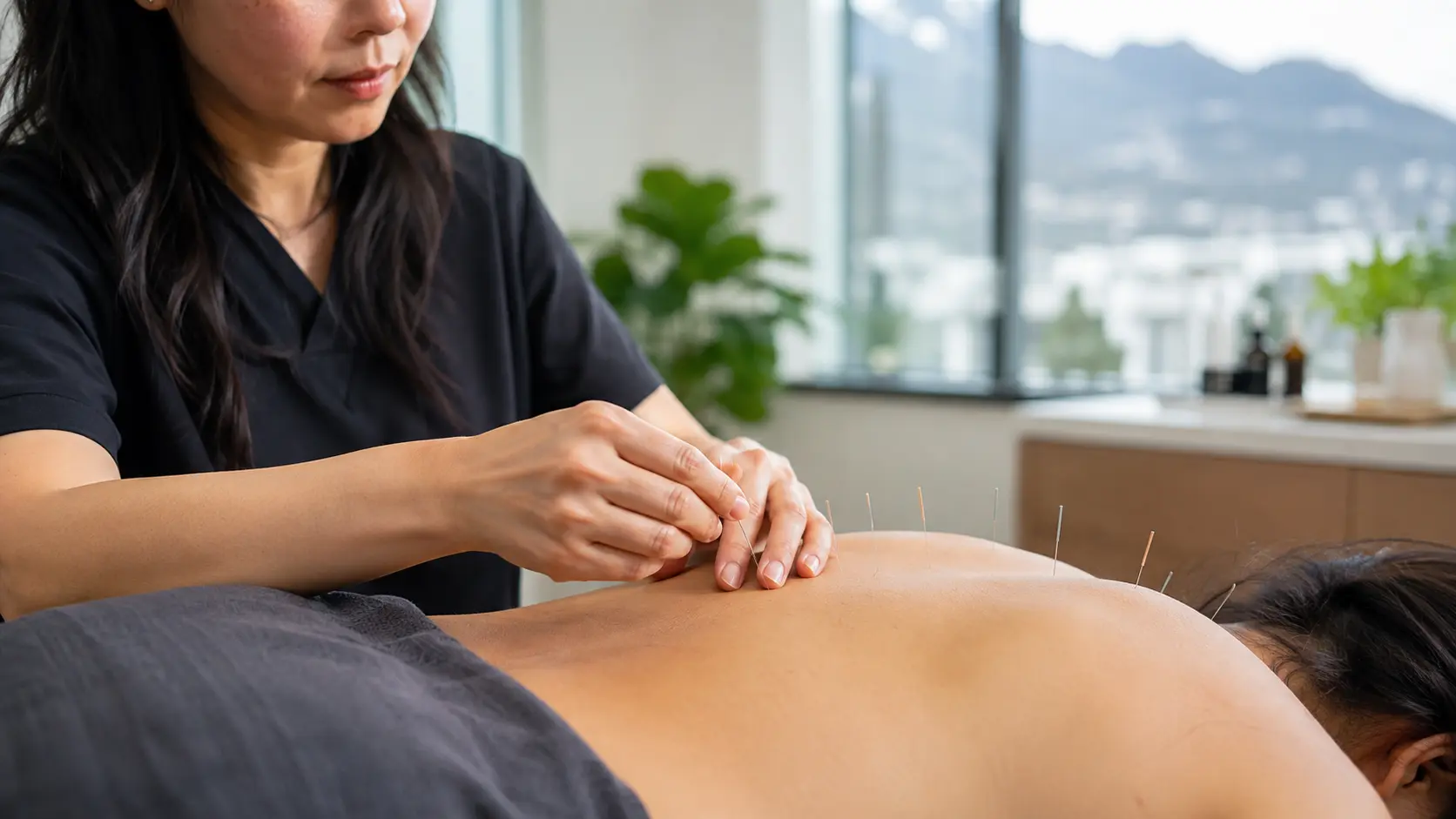
Acupuncture uses very fine, sterile needles that are placed at specific points on the body.
It has been used for centuries as part of Traditional Chinese Medicine. In Traditional Chinese Medicine, acupuncture is often explained through ideas such as balance, Qi, and pathways in the body known as meridians.
Modern research also looks at how acupuncture may affect the nervous system, muscles, and the way the body responds to pain.
You do not need to understand every theory behind acupuncture before starting treatment.
What matters is that you understand what your practitioner is recommending, why it may be useful for you, and what to expect during your appointment.
Why Choose Zone 4 for Acupuncture?
Choosing an acupuncture clinic is about more than booking the first available appointment. You should feel comfortable with your practitioner, understand your treatment, and have the chance to ask questions.
At Zone 4, we focus on clear communication and personalized care from your first visit.
| Service | What to Expect |
|---|---|
One-on-One Assessment | Your first appointment starts with a conversation about your symptoms, health history, previous injuries, medications, daily activities, and treatment goals. This helps your practitioner understand your concerns and decide whether acupuncture may be appropriate for you. |
Personalized Treatment | Acupuncture is not a one-size-fits-all treatment. The points, techniques, and number of sessions may vary from person to person. Your treatment plan may also change based on how you feel and how your symptoms respond. |
Care from a Registered Acupuncturist | Your treatment is provided by a Registered Acupuncturist in British Columbia. Knowing who is treating you and understanding their professional background can help you feel more confident about your care. |
Different Treatment Options | Depending on your needs, your treatment may include:
Your practitioner will explain what is being recommended |
More Services in One Clinic | Zone 4 also offers physiotherapy, massage therapy, and chiropractic care. For some patients, having several services available in the same clinic can make it easier to manage different parts of their recovery. |
Why Do People Choose Acupuncture?
People book acupuncture for many different reasons. Some are looking for help with pain or muscle tension. Others use it as part of their recovery from an injury or to support their overall well-being.
Common reasons people may consider acupuncture include:
- ✔Knee pain
- ✔Muscle tension
- ✔Lower back pain
- ✔Repetitive strain
- ✔Muscle soreness
- ✔Sports-related injuries
- ✔Headaches and migraines
- ✔Joint and muscle discomfort
- ✔Neck and shoulder discomfort
- ✔General relaxation and wellness
- ✔Pain or tension after a car accident
Results are different for everyone, and acupuncture should not be viewed as a guaranteed cure for any medical condition.
Your practitioner will review your symptoms and let you know whether acupuncture makes sense for you.
If another type of care or medical assessment would be a better fit, that may be recommended instead.
Acupuncture Treatments Available at Zone 4
There are several ways acupuncture can be used.
You may not need every technique listed below. Your practitioner will choose an approach based on your symptoms, health history, and goals.
| Treatment Type | What It Involves |
|---|---|
Traditional Acupuncture | Traditional acupuncture involves placing fine needles at selected points on the body. The number of needles and where they are placed will depend on the reason for your visit. |
Electro-Acupuncture | Electro-acupuncture uses a gentle electrical current connected to selected acupuncture needles. It may be used for certain types of muscle tension or pain. Your practitioner will let you know if this option is suitable for you. |
Motor Point Acupuncture | Motor point acupuncture focuses on specific areas where nerves connect with muscles. It may be used when treatment is focused on muscle tension, movement, or muscle function. |
Scalp Acupuncture | Scalp acupuncture uses selected points on the scalp as part of a treatment plan. Your practitioner will explain why this technique may be recommended and what you can expect during the session. |
Auricular Acupuncture | Auricular acupuncture uses points on the outer ear. It may be used on its own or together with other acupuncture techniques, depending on your treatment plan. |
Cupping Therapy | Cupping uses suction cups placed on selected areas of the body. It is often used along with acupuncture for tight or sore muscles. Cupping can leave temporary circular marks or skin discolouration, which usually fade over time. |
Gua Sha | Gua Sha uses a smooth-edged tool that is gently moved over selected areas of the skin. It may be added to treatment when working with muscle tension or soft-tissue discomfort. |
Acupressure | Acupressure uses pressure from the hands or fingers instead of needles. It may be used on its own or together with other techniques. |
Facial Acupuncture | Facial acupuncture, facial cupping, and Gua Sha may be available for people interested in facial wellness treatments. Your practitioner can explain what these treatments involve and what you can realistically expect from them. |
What to Expect at Your First Appointment
If you have never had acupuncture before, you may be wondering what happens during a session.
Here is what you can generally expect.
We Talk About Your Health and Symptoms
Your practitioner will ask about your main concern and may also ask about:
- Lifestyle
- Daily activities
- Your symptoms
- Treatment goals
- Previous injuries
- Your health history
- Current medications
Be open about any health conditions or concerns you have. This helps your practitioner plan treatment safely.
Your Treatment Is Explained
Before treatment starts, your practitioner will explain what they recommend.
This is also your chance to ask questions.
You should understand what is being done and feel comfortable before the treatment begins.
The Needles Are Placed
Very fine, sterile, single-use needles are placed at selected points on the body.
The number of needles and their location will depend on your treatment plan.
You Relax During the Treatment
The needles may stay in place for part of your appointment while you rest.
Other techniques may also be used if they are part of your treatment plan.
We Review How You Feel
After your session, your practitioner may ask how you feel and discuss whether another appointment is recommended.
Your treatment can be adjusted as you progress.
Does Acupuncture Hurt?
This is one of the most common questions people ask before their first appointment.
Acupuncture needles are much thinner than the needles normally used for injections or blood tests.
Some people feel very little when the needles are inserted.
Others may feel:
- Tingling
- Warmth
- Heaviness
- A dull ache
- A quick pinch
- Mild pressure
These feelings are usually brief.
If you feel uncomfortable at any point, tell your practitioner. The treatment can be adjusted to help you feel more comfortable.
Is Acupuncture Safe?
Acupuncture is generally considered safe when it is performed by a trained practitioner using proper techniques and sterile, single-use needles.
Before treatment, make sure your practitioner knows about any medical conditions or medications that could affect your care.
Let us know if you:
- Have a bleeding disorder
- Have recently had surgery
- Take blood-thinning medication
- Are pregnant or may be pregnant
- Have an active skin infection in the area being treated
- Have had an unusual reaction to acupuncture in the past
- Have a pacemaker or another implanted electrical device
Electro acupuncture may not be suitable for everyone, especially for some people with implanted electrical devices.
If you have any concerns, talk to your practitioner before treatment begins.
Meet Your Acupuncturist In North Vancouver
Acupuncture services at Zone 4 are provided by Pooneh Malaekeh, a Registered Acupuncturist in British Columbia. Pooneh also has a professional background in pharmacy and healthcare.
Her treatments may include:
- Cupping
- Gua Sha
- Acupressure
- Facial cupping
- Scalp acupuncture
- Facial acupuncture
- Electro-acupuncture
- Auricular acupuncture
- Motor point acupuncture
- Traditional acupuncture
Pooneh takes each patient’s symptoms, health history, and goals into account when planning treatment.
Acupuncture for Muscle Pain and Sports Injuries
Sports, exercise, work, and everyday activities can all put stress on the muscles and joints.
If you are dealing with tight muscles, soreness, or discomfort from an injury, acupuncture may be considered as part of your recovery plan.
The right treatment depends on the type of injury and your symptoms.
More treatment does not always mean better treatment.
The goal is to choose the services that make sense for your needs and help you work toward your recovery goals.
Acupuncture After a Car Accident
Pain, stiffness, headaches, and muscle tension can sometimes continue after a motor vehicle accident.
Depending on your symptoms, acupuncture may be considered as part of your recovery.
If you have an active ICBC claim, contact our clinic and have your claim information ready.
Our team can help you understand the next steps and whether your claim may cover acupuncture treatment.
Insurance and Direct Billing
Many extended health plans include acupuncture coverage, but every insurance plan is different.
Before your appointment, it can be helpful to check:
- Your annual coverage limit
- Whether acupuncture is covered
- Whether direct billing is available
- How much your plan will reimburse
- Whether you need a doctor’s referral
- How much you may need to pay out of pocket
Our front desk can help with general billing questions.
For details about your specific plan, contact your insurance provider directly.
Can Acupuncture Be Combined With Physiotherapy or Massage Therapy?
Yes, in some cases.
For some injuries, acupuncture may be used alongside physiotherapy as part of a broader recovery plan. While acupuncture may help with pain and muscle tension, physiotherapy can focus on movement, strength, mobility, and returning to daily activities.
If you are dealing with an injury or ongoing discomfort, acupuncture works well alongside our physiotherapy in North Vancouver services as part of a broader recovery plan.
How Many Acupuncture Sessions Will I Need?
There is no set number of sessions that is right for everyone.
How often you come in may depend on:
- Your goals
- Your overall health
- How severe your symptoms are
- How you respond to treatment
- What you are being treated for
- How long you have had the symptoms
Some people may only need short-term care. Others may choose to continue treatment for a longer period.
Your practitioner will review your progress and adjust the plan when needed.
You should not be expected to follow the same schedule as every other patient.
How to Prepare for Your Acupuncture Appointment
You do not need to do much before acupuncture, but a few simple steps can make your visit more comfortable.
Before your appointment:
- Stay hydrated
- Bring a list of medications if needed
- Try not to arrive on an empty stomach
- Tell us if you are nervous about needles
- Wear loose, comfortable clothing when possible
- Tell your practitioner about any important health conditions
- Let your practitioner know if you are pregnant or may be pregnant
- Bring your ICBC claim information if your visit is related to a car accident
- Bring your insurance information if you have questions about coverage
Most importantly, feel free to ask questions at any point during your visit
Book Your Acupuncture Appointment
If you are considering acupuncture for pain, muscle tension, headaches, injury recovery, or general wellness, our team can help you understand your options.
At Zone 4 Physiotherapy & Wellness Centre, we focus on personalized care and treatment that fits your individual needs.
North Vancouver, BC V7M 1T3
Frequently Asked Questions
What is acupuncture?
Acupuncture is a traditional Chinese medicine practice that involves inserting thin needles into specific points on the body to promote healing and balance. It aims to restore the natural flow of energy, or Qi, within the body, addressing various health issues.
How does acupuncture work?
Acupuncture works by stimulating specific points on the body, known as acupuncture points, to restore the balance and flow of energy, or Qi. This can help to alleviate pain, reduce inflammation, and promote natural healing processes.
What conditions can acupuncture treat?
Acupuncture can treat a wide range of conditions, including chronic pain (such as back, neck, and joint pain), headaches and migraines, stress and anxiety, digestive issues, insomnia, allergies, and more. It is also used to support overall wellness and balance.
Is acupuncture safe?
es, acupuncture is generally safe when performed by a trained and licensed practitioner. The needles used are sterile, single-use, and very fine, minimizing the risk of infection or injury. It’s important to discuss any health concerns with your acupuncturist before beginning treatment.
What can I expect during an acupuncture session?
During an acupuncture session, the practitioner will conduct a thorough health assessment and discuss your symptoms and goals. You will then lie comfortably while thin needles are inserted into specific points on your body. The needles are usually left in place for 20 to 30 minutes while you relax. The experience is typically calming and many people find it to be quite relaxing.