Osteopathy in North Vancouver
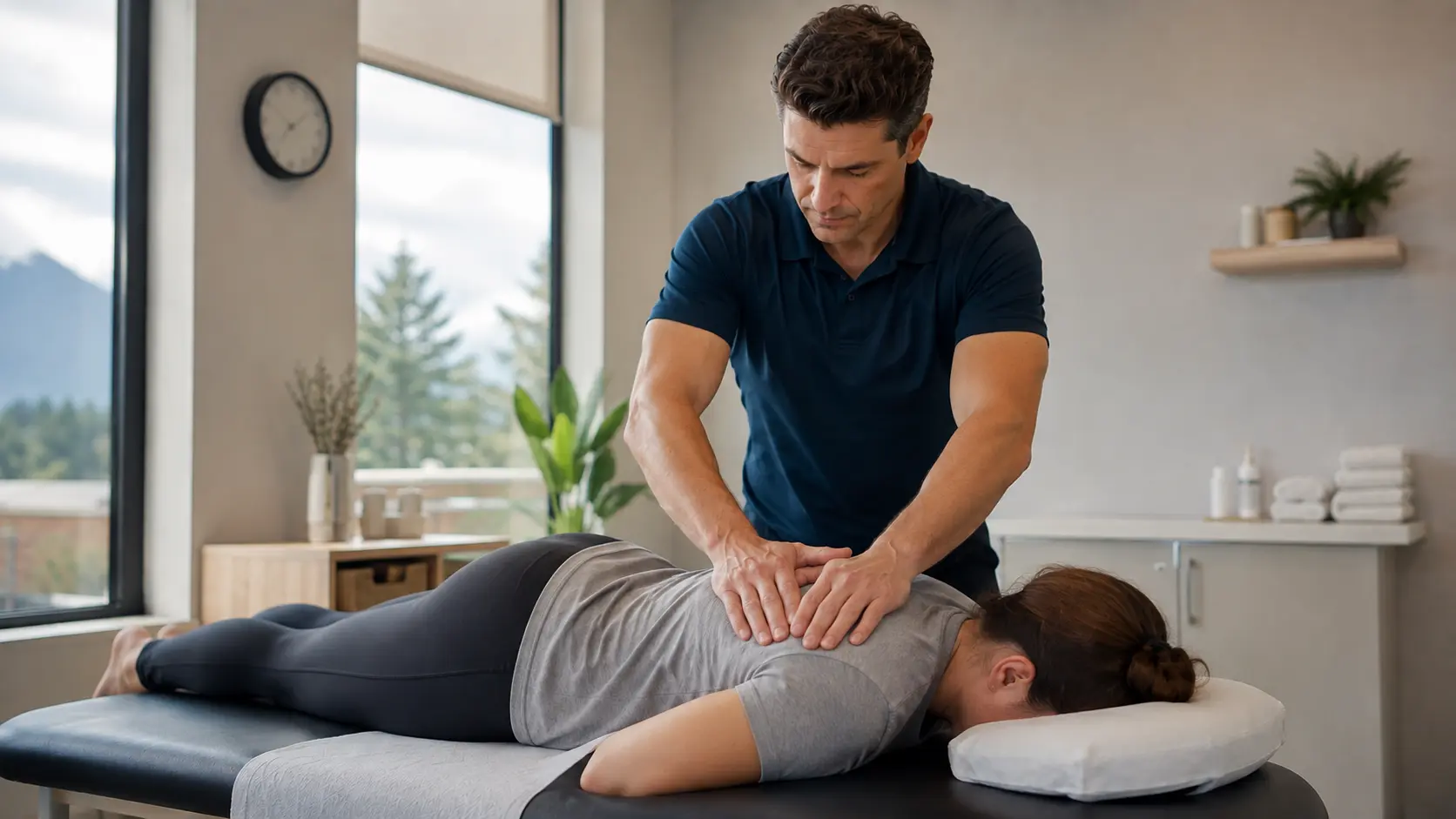
Our manual osteopathy services in North Vancouver are provided by a qualified Manual Osteopathic Practitioner, offering personalized hands-on care to help patients manage stiffness, muscle tension, and movement restrictions.
Your appointment is based on what you are experiencing, how you move, and what you would like to get back to doing comfortably.
What Is Manual Osteopathy?
Manual osteopathy is a hands-on approach that focuses on the muscles, joints, connective tissues, and how different areas of the body move together.
Treatment does not follow the same routine for every person.
Your practitioner first looks at where you are having difficulty and how surrounding areas may be involved. Treatment may then use gentle hands-on techniques to improve movement and reduce tension in areas that feel restricted.
Manual osteopathy is commonly used by people dealing with musculoskeletal pain, stiffness, or changes in mobility.
When Might You Consider Osteopathy?
You do not need to wait until pain becomes severe before having a movement or musculoskeletal concern assessed.
People may consider manual osteopathy when they are experiencing:
- ✓Joint stiffness
- ✓Neck stiffness
- ✓Hip discomfort
- ✓Muscle tightness
- ✓Shoulder tension
- ✓Reduced mobility
- ✓Postural discomfort
- ✓Lower back discomfort
- ✓Sports-related aches and strains
- ✓General stiffness after periods of inactivity
- ✓Muscle and joint discomfort after an injury
- ✓Repetitive strain from work or daily activities
Not every type of pain is appropriate for manual therapy.
If your symptoms suggest that you need medical assessment, diagnostic testing, or another type of healthcare, you may be advised to see the appropriate provider.
Treatment Starts With How You Move
Where you feel pain is not always the only area worth looking at.
For example, if your lower back is bothering you, your practitioner may also look at how your hips, pelvis, and surrounding muscles are moving.
If you have shoulder discomfort, movement through your upper back or neck may also be relevant.
This does not mean that every symptom comes from somewhere else in the body. It simply means that movement is connected, and nearby areas can sometimes influence how comfortable or restricted you feel.
Your assessment helps determine which areas are relevant to your concern instead of treating every part of the body unnecessarily.
Hands-On Techniques Used in Manual Osteopathy
The techniques used during your appointment depend on your symptoms, comfort level, and the findings from your assessment.
Treatment may include:
Soft Tissue Techniques
Hands-on pressure and movement may be used around muscles and other soft tissues that feel tight or sensitive.
Joint Mobilization
Gentle movements may be applied to a joint to work on stiffness and range of motion.
Myofascial Techniques
These techniques focus on areas of soft tissue and connective tissue that may feel restricted or tense.
Muscle Energy Techniques
You may be asked to gently contract a muscle against light resistance while your practitioner guides the movement.
Gentle Stretching and Movement
Controlled stretching or movement may be used when appropriate to work on flexibility and mobility.
You may not need all of these techniques during your appointment.
Your practitioner should explain what they are doing and why a particular approach is being used.
What Does an Osteopathy Appointment Look Like?
Your first appointment begins with a conversation about what brought you in.
You may be asked about:
- Where you feel pain or stiffness
- When your symptoms started
- Activities that make them better or worse
- Previous injuries
- Your work and daily activities
- Exercise or sports
- Relevant health conditions
- Your goals for treatment
Your practitioner may then look at movements related to your concern.
For example, you may be asked to bend, turn, reach, walk, or move a specific joint so they can better understand where you feel restricted.
Hands-on treatment can follow based on what is appropriate for you.
Throughout the appointment, you can ask questions or let your practitioner know if anything feels uncomfortable.
Is Manual Osteopathy Painful?
Manual osteopathy does not need to be aggressive to be useful.
Many techniques use gentle pressure, stretching, or controlled movement.
You may feel pressure or stretching during certain parts of treatment, especially around an area that is already sensitive or tight.
Treatment should still remain within a level that you are comfortable with.
If something feels painful or does not feel right, tell your practitioner so the technique can be changed or stopped.
Osteopathy for Back and Neck Discomfort
Back and neck concerns are common reasons people seek hands-on care.
Long periods of sitting, repetitive work, exercise, lifting, previous injuries, and changes in activity can all affect how your back or neck feels.
Manual osteopathy may be used to work on:
- Muscle tension
- Joint stiffness
- Restricted movement
- General back discomfort
- Neck and shoulder tension
Your treatment will depend on what is contributing to your symptoms.
Persistent or severe back or neck pain can sometimes require assessment from a physician, physiotherapist, or another healthcare professional, particularly when neurological symptoms or other warning signs are present.
Osteopathy for Active People
You do not need to be a competitive athlete to experience movement-related aches and stiffness.
Running, cycling, hiking, skiing, strength training, recreational sports, and physically demanding work can all place repeated stress on muscles and joints.
Manual osteopathy may be considered when muscle tension, stiffness, or restricted movement is making an activity uncomfortable.
The goal is not simply to get through a treatment session feeling looser. It is also important to understand whether your activity, workload, strength, mobility, or recovery habits may be contributing to the problem.
For some people, hands-on treatment is only one part of the solution.
Osteopathy or Physiotherapy: Which One Should You Choose?
There is some overlap between manual osteopathy and physiotherapy, but the two services are not identical.
Manual osteopathy is mainly hands-on and may be useful when your concern involves stiffness, muscle tension, or restricted movement.
Physiotherapy may include hands-on treatment as well, but often places more emphasis on rehabilitation, exercise, strength, mobility, and returning to work, sport, or daily activities after an injury.
The better choice depends on what you are dealing with.
If your main concern involves an injury, weakness, reduced function, or returning to activity, our team also provides physiotherapy in North Vancouver, with treatment focused on movement, strength, and recovery.
In some situations, physiotherapy and manual osteopathy may be used at different stages of care.
More treatment is not automatically better. The aim is to use the type of care that makes sense for your needs.
Can Osteopathy Be Combined With Massage Therapy or Acupuncture?
It can be, but not everyone needs several treatments at the same time.
Massage therapy may be useful when treatment is primarily focused on muscles and soft tissues.
Acupuncture may be another option for people dealing with certain types of pain or muscle tension.
Manual osteopathy takes a hands-on approach to movement and musculoskeletal restrictions.
Which service makes the most sense depends on your symptoms and goals.
If you are unsure what to book, our team can help you choose the most appropriate starting point.
When Should You Seek Medical Care First?
Not every new pain or physical symptom should be treated with manual therapy.
Seek medical attention if you have symptoms such as:
- A recent serious injury
- Sudden or severe unexplained pain
- New loss of strength or coordination
- Significant numbness or weakness
- Loss of bladder or bowel control
- Chest pain or difficulty breathing
- Unexplained fever with significant pain
- Symptoms that are rapidly getting worse
This is not a complete list.
If you are unsure whether manual osteopathy is appropriate for you, speak with a healthcare professional before starting treatment.
How Many Osteopathy Sessions Will I Need?
There is no standard number of appointments.
Someone with a recent episode of stiffness may have very different needs from someone who has been dealing with the same problem for months.
How often you book may depend on:
- Your symptoms
- How long they have been present
- Your daily activities
- Your treatment goals
- How you respond after each visit
Your progress should guide future appointments rather than following the same schedule for every patient.
What Should I Wear to My Appointment?
Wear clothing that allows you to move comfortably.
Depending on the area being assessed, your practitioner may ask you to perform simple movements such as bending, reaching, rotating, or walking.
Comfortable athletic clothing is usually a good choice.
You should also tell your practitioner about any recent injuries, surgeries, medical conditions, or other information that may affect your treatment.
Insurance Coverage for Manual Osteopathy
Some extended health plans provide coverage for manual osteopathy, but coverage varies between insurers and individual plans.
Before booking, check:
- Whether manual osteopathy is included in your benefits
- Which practitioner credentials your insurer accepts
- Your annual coverage limit
- Whether a referral is required
- Whether you need to submit your receipt yourself
- Whether direct billing is available under your plan
Because insurers may have different requirements for manual osteopathy, it is best to confirm your coverage directly with your insurance provider.
Our front desk can also help with general billing questions.
Book Osteopathy in North Vancouver
If pain, stiffness, or restricted movement is getting in the way of work, exercise, or everyday activities, manual osteopathy may be one option to consider.
At Zone 4 Physiotherapy & Wellness Centre, treatment is based on your individual concern rather than following the same routine for every patient.
Book an appointment to find out whether osteopathy in North Vancouver at Zone 4 is a good fit for your needs.
North Vancouver, BC V7M 1T3
Frequently Asked Questions
What can osteopathy help with?
People may consider manual osteopathy for concerns such as muscle tension, joint stiffness, restricted movement, back or neck discomfort, and general musculoskeletal aches. Whether it is appropriate for you depends on your symptoms and individual situation.
What happens at my first osteopathy appointment?
Your first visit starts with a conversation about your symptoms, previous injuries, daily activities, and what you want to improve. Your practitioner may then assess how you move before recommending any hands-on treatment.
How many osteopathy sessions will I need?
There is no set number of visits. It depends on your symptoms, how long they have been present, your goals, and how you respond to treatment.