
High Power Laser Therapy in North Vancouver
High Power Laser Therapy is a non-invasive treatment that uses therapeutic light energy to target injured or painful tissues.
At Zone 4 Physiotherapy & Wellness Centre, High Power Laser Therapy in North Vancouver may be used as part of a personalized physiotherapy treatment plan when appropriate for your condition.
Laser therapy is generally used alongside other physiotherapy treatments such as exercise, manual therapy, mobility work, and strengthening rather than as a stand-alone treatment.
Your physiotherapist will first assess your symptoms, movement, and overall condition to determine whether laser therapy may be suitable for you.
What Is High Power Laser Therapy?
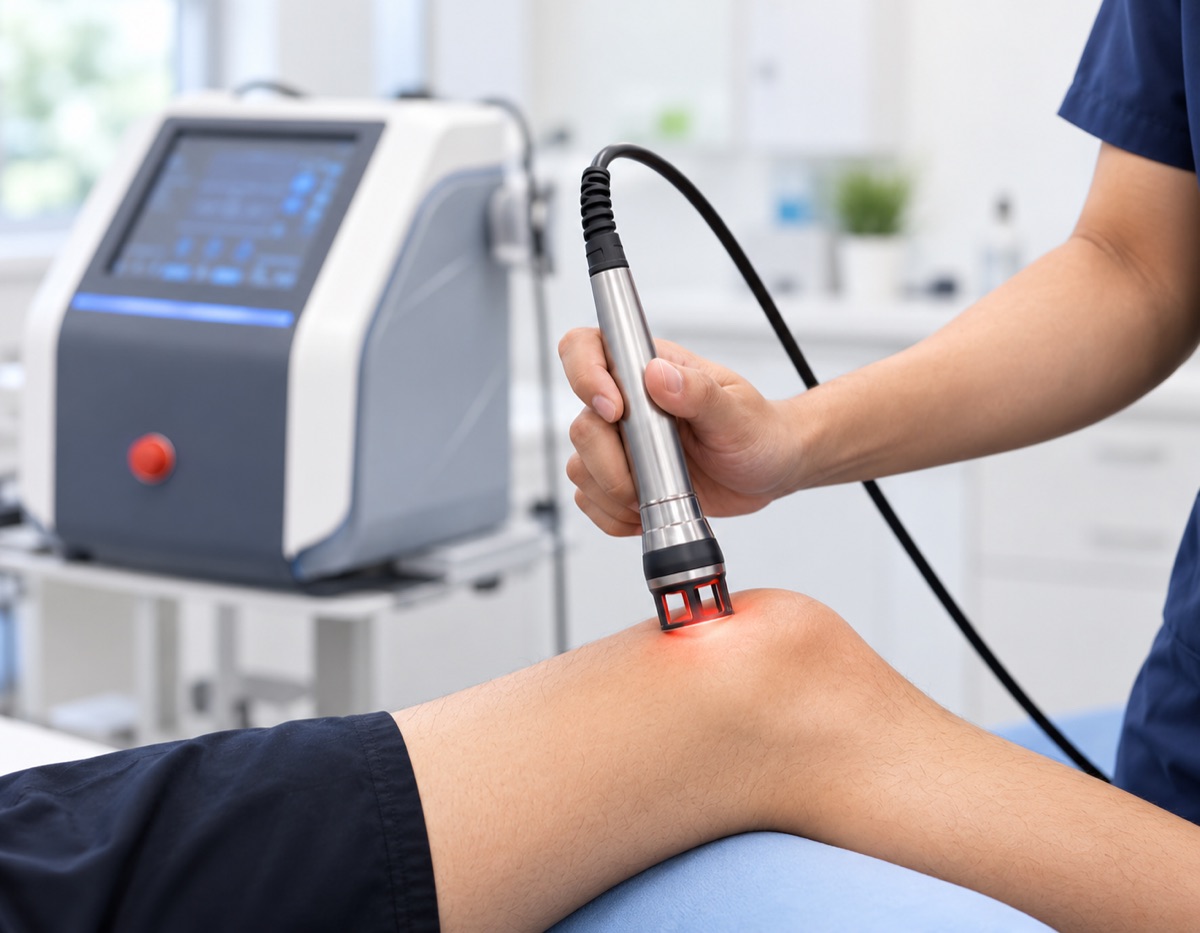
High Power Laser Therapy uses concentrated therapeutic light that is applied to a specific area of the body through a handheld device.
The treatment is a form of photobiomodulation, which means light energy is delivered to tissue with the goal of influencing biological processes associated with recovery.
Compared with lower-powered laser devices, high power systems are capable of delivering greater amounts of energy during treatment.
Treatment does not involve needles, injections, or incisions.
How Does High Power Laser Therapy Work?
During treatment, therapeutic light energy passes through the skin and is absorbed by cells in the targeted tissues.
This light can influence cellular processes involved in energy production and tissue response.
In physiotherapy, laser therapy may be used with the goal of supporting:
- +Pain management
- +Tissue recovery
- +Local circulation
- +Management of inflammation
- +Recovery from certain musculoskeletal injuries
- +Improved tolerance for movement and rehabilitation
The response to treatment varies depending on the condition being treated, the tissue involved, and the individual patient.
For this reason, laser therapy should be selected based on assessment rather than used automatically for every painful condition.
What Conditions Can High Power Laser Therapy Be Used For?
Depending on your assessment, High Power Laser Therapy may be considered for a range of musculoskeletal conditions.
These may include:
- +Muscle strains
- +Ligament sprains
- +Tendon injuries
- +Joint pain
- +Shoulder pain
- +Knee pain
- +Back pain
- +Neck pain
- +Achilles tendinopathy
- +Rotator cuff conditions
- +Tennis elbow
- +Plantar fasciitis
- +Sports injuries
- +Certain overuse injuries
- +Post-surgical rehabilitation when appropriate
The presence of pain alone does not necessarily mean laser therapy is the right treatment.
Your physiotherapist will assess your condition and determine whether it may be useful as part of your rehabilitation plan.
High Power Laser Therapy for Sports Injuries
Sports injuries can affect muscles, tendons, ligaments, and joints.
High Power Laser Therapy may sometimes be included in the rehabilitation of certain sports-related injuries to help manage symptoms and support the recovery process.
Depending on the injury, physiotherapy may also include:
- +Strengthening exercises
- +Mobility work
- +Manual therapy
- +Balance and stability training
- +Movement retraining
- +Load management
- +Gradual return to sport
The goal is not only to reduce discomfort but also to restore the strength, movement, and physical capacity needed for your activity.
High Power Laser Therapy for Tendon Problems
Tendon conditions can sometimes become persistent, particularly when the tendon is repeatedly exposed to loads that exceed its current capacity.
Laser therapy may be considered for certain tendon conditions, including:
- +Achilles tendinopathy
- +Rotator cuff tendinopathy
- +Patellar tendinopathy
- +Tennis elbow
- +Other overuse-related tendon problems
However, tendon rehabilitation usually requires progressive exercise and loading.
Laser therapy may therefore be used as one part of treatment while your physiotherapy program focuses on gradually improving the tendon’s ability to tolerate activity.
High Power Laser Therapy for Joint Pain
Joint pain can result from many different causes, including injury, irritation, overuse, or degenerative changes.
Depending on your condition, laser therapy may be considered as part of a physiotherapy program for certain painful joints.
Treatment may also involve:
- +Mobility exercises
- +Strengthening
- +Manual therapy
- +Activity modification
- +Movement retraining
- +Education about managing aggravating activities
Your physiotherapist will determine which treatments are most appropriate based on what is contributing to your symptoms.
High Power Laser Therapy for Back and Neck Pain
Back and neck pain can involve muscles, joints, nerves, or other structures.
Because there are many possible causes, treatment should begin with an appropriate physiotherapy assessment.
For some patients, High Power Laser Therapy may be used as an additional treatment to help manage symptoms while rehabilitation focuses on restoring movement, strength, and function.
Your physiotherapy program may also include:
- +Mobility exercises
- +Strengthening
- +Postural or movement education
- +Manual therapy
- +Activity modification
- +Gradual return to regular activity
High Power Laser Therapy After an Injury
After an injury, pain and irritation can make movement more difficult.
When appropriate for the type and stage of injury, laser therapy may be used to support symptom management and help you participate more comfortably in rehabilitation.
However, your treatment plan should still address the physical factors needed for recovery.
This may include restoring:
- +Range of motion
- +Strength
- +Balance
- +Stability
- +Endurance
- +Functional movement
As you improve, your treatment should progress based on what you are able to do rather than relying only on passive treatment.
High Power Laser Therapy During Post-Surgical Rehabilitation
Laser therapy may sometimes be considered during rehabilitation following certain orthopaedic procedures.
This depends on factors such as:
- +The type of surgery
- +Stage of healing
- +Condition of the surgical area
- +Instructions from your surgeon
- +Your current symptoms
- +Your rehabilitation plan
Post-surgical physiotherapy usually follows specific precautions and progression guidelines.
Your physiotherapist will determine whether laser therapy is appropriate and how it fits within those restrictions.
What Happens During a High Power Laser Therapy Session?
Before treatment begins, your physiotherapist will assess your condition and explain why laser therapy is being considered.
1. Assessment
Your physiotherapist may ask about:
- +Where you are experiencing symptoms
- +How the problem started
- +How long symptoms have been present
- +Activities that aggravate your condition
- +Your medical history
- +Previous treatment
- +Your work, exercise, or sport requirements
- +Your recovery goals
2. Preparing the Treatment Area
The treatment area is identified and positioned so the laser can be applied appropriately.
Protective eyewear is used during treatment.
3. Applying the Laser
The physiotherapist moves or positions the laser applicator over the targeted area.
You may notice a mild warming sensation during treatment.
4. Adjusting Treatment
Treatment settings may vary depending on factors such as:
- +The area being treated
- +Tissue depth
- +Type of condition
- +Stage of recovery
- +Treatment goals
5. Continuing Your Rehabilitation
Laser therapy may be followed by exercise, mobility work, manual therapy, or other physiotherapy treatments.
This helps connect symptom management with the active rehabilitation needed to restore function.
Does High Power Laser Therapy Hurt?
High Power Laser Therapy is generally intended to be comfortable.
Many patients notice mild warmth in the treatment area.
The treatment should not feel excessively hot or painful.
If you experience discomfort during treatment, tell your physiotherapist so the treatment can be adjusted.
How Long Does High Power Laser Therapy Take?
The laser portion of a physiotherapy appointment is usually relatively short.
The exact treatment time depends on factors such as:
- +The condition being treated
- +Size of the treatment area
- +Treatment settings
- +Your individual treatment plan
Your full physiotherapy session may also include exercises, assessment, manual therapy, education, or other treatments.
How Many Laser Therapy Sessions Will I Need?
There is no universal number of treatments that works for every condition.
The recommended number of sessions depends on factors such as:
- +Your diagnosis
- +Severity of symptoms
- +How long the problem has been present
- +Stage of recovery
- +Your response to treatment
- +Other treatments included in your rehabilitation program
- +Your functional goals
Your physiotherapist will reassess your progress and determine whether continuing laser therapy is appropriate.
High Power Laser Therapy vs. Cold Laser Therapy
High Power Laser Therapy and low-level or “cold” laser therapy both use therapeutic light, but they differ in the amount of power and energy delivered.
Higher-powered therapeutic lasers can deliver more energy within a shorter period of time and may be used to treat deeper musculoskeletal tissues.
However, greater power does not automatically mean a treatment is better for every condition.
The important question is whether laser therapy is appropriate for your particular injury or rehabilitation goals.
Your physiotherapist will determine whether it should be included in your treatment plan.
High Power Laser Therapy vs. Shockwave Therapy
Laser therapy and shockwave therapy are different treatments.
High Power Laser Therapy uses therapeutic light energy.
Shockwave therapy uses acoustic pressure waves.
Both may be used in physiotherapy, but they work differently and may be appropriate for different conditions or stages of recovery.
Shockwave therapy is commonly considered for certain persistent tendon problems, while laser therapy may be considered across a broader range of acute and chronic musculoskeletal conditions.
Your physiotherapist may recommend one, both, or neither depending on your assessment.
Is High Power Laser Therapy Safe?
High Power Laser Therapy should be performed by an appropriately trained healthcare professional using suitable safety precautions.
Protective eyewear is required during treatment.
Before treatment begins, tell your physiotherapist about your medical history and any health concerns.
Laser therapy may not be appropriate over certain areas or in certain situations.
These may include:
- +Pregnancy over the treatment area
- +Active cancer in the treatment area
- +Active bleeding
- +Certain eye conditions
- +Areas with significantly altered sensation
- +Certain medications or medical conditions
- +Direct application over the eyes
Your physiotherapist will screen for contraindications before recommending treatment.
High Power Laser Therapy as Part of Physiotherapy
At Zone 4, laser therapy is used as one treatment option within a broader physiotherapy plan.
Your rehabilitation may include:
- +Therapeutic exercise
- +Manual therapy
- +Strengthening
- +Mobility exercises
- +Movement retraining
- +Education
- +Activity modification
- +Shockwave therapy when appropriate
- +IMS when appropriate
- +Gradual return to work, sport, or exercise
The treatment plan depends on your condition rather than following the same combination of treatments for every patient.
Why Choose Zone 4 for High Power Laser Therapy?
At Zone 4 Physiotherapy & Wellness Centre, treatment starts with understanding your condition.
We assess your symptoms, movement, physical abilities, and recovery goals before deciding whether High Power Laser Therapy should be included in your care.
Our approach includes:
- +Individual physiotherapy assessment
- +Personalized treatment plans
- +High Power Laser Therapy when appropriate
- +Exercise-based rehabilitation
- +Manual therapy when appropriate
- +Progress-based treatment
- +Multiple physiotherapy treatment options
- +Convenient North Vancouver location
Our focus is on helping you improve movement and function while using appropriate treatment tools to support your recovery.
Book High Power Laser Therapy in North Vancouver
If you are dealing with a sports injury, tendon problem, muscle or joint pain, or another musculoskeletal condition, a physiotherapy assessment can help determine the most appropriate treatment approach.
Contact Zone 4 Physiotherapy & Wellness Centre to find out whether High Power Laser Therapy may be suitable for your condition.
Zone 4 Physiotherapy & Wellness Centre
147 16th St West, Suite #300
North Vancouver, BC V7M 1T3
Frequently Asked Questions
What is High Power Laser Therapy?
High Power Laser Therapy is a non-invasive treatment that uses therapeutic light energy applied to targeted tissues.
It may be used as part of physiotherapy to support symptom management and rehabilitation for certain musculoskeletal conditions.
Is High Power Laser Therapy the same as Class IV laser therapy?
The terms are often used together because many high-power therapeutic laser devices fall within the Class IV laser safety classification.
The classification relates primarily to laser power and safety requirements, including the need for protective eyewear.
What does High Power Laser Therapy feel like?
Most people experience little more than mild warmth in the treatment area.
Treatment should remain comfortable. Tell your physiotherapist if the area begins to feel excessively warm or uncomfortable.
What can High Power Laser Therapy treat?
Depending on your assessment, laser therapy may be considered for certain muscle, tendon, ligament, and joint conditions, as well as some sports injuries and post-surgical rehabilitation programs.
Your physiotherapist will determine whether it is appropriate for your specific condition.
Can High Power Laser Therapy help with tendon pain?
Can laser therapy help with arthritis?
Laser therapy may be considered as an adjunct treatment for some people with joint pain, including certain osteoarthritis-related symptoms.
Treatment should usually be combined with exercise and other appropriate rehabilitation strategies based on your assessment.
Is High Power Laser Therapy better than shockwave therapy?
Neither treatment is automatically better.
They use different types of energy and may be appropriate for different conditions.
Your physiotherapist can determine which treatment is more suitable based on your symptoms, diagnosis, and stage of recovery.
How many High Power Laser Therapy sessions do I need?
Treatment frequency varies depending on your condition and response.
Your physiotherapist will monitor your progress and determine whether additional sessions are appropriate.
Do I need a doctor's referral for High Power Laser Therapy?
Is High Power Laser Therapy covered by insurance?
If High Power Laser Therapy is provided as part of a physiotherapy appointment, reimbursement may fall under your physiotherapy benefits.
Coverage varies by insurance provider and individual plan, so you should check your policy for specific details.