Kinesiology in North Vancouver
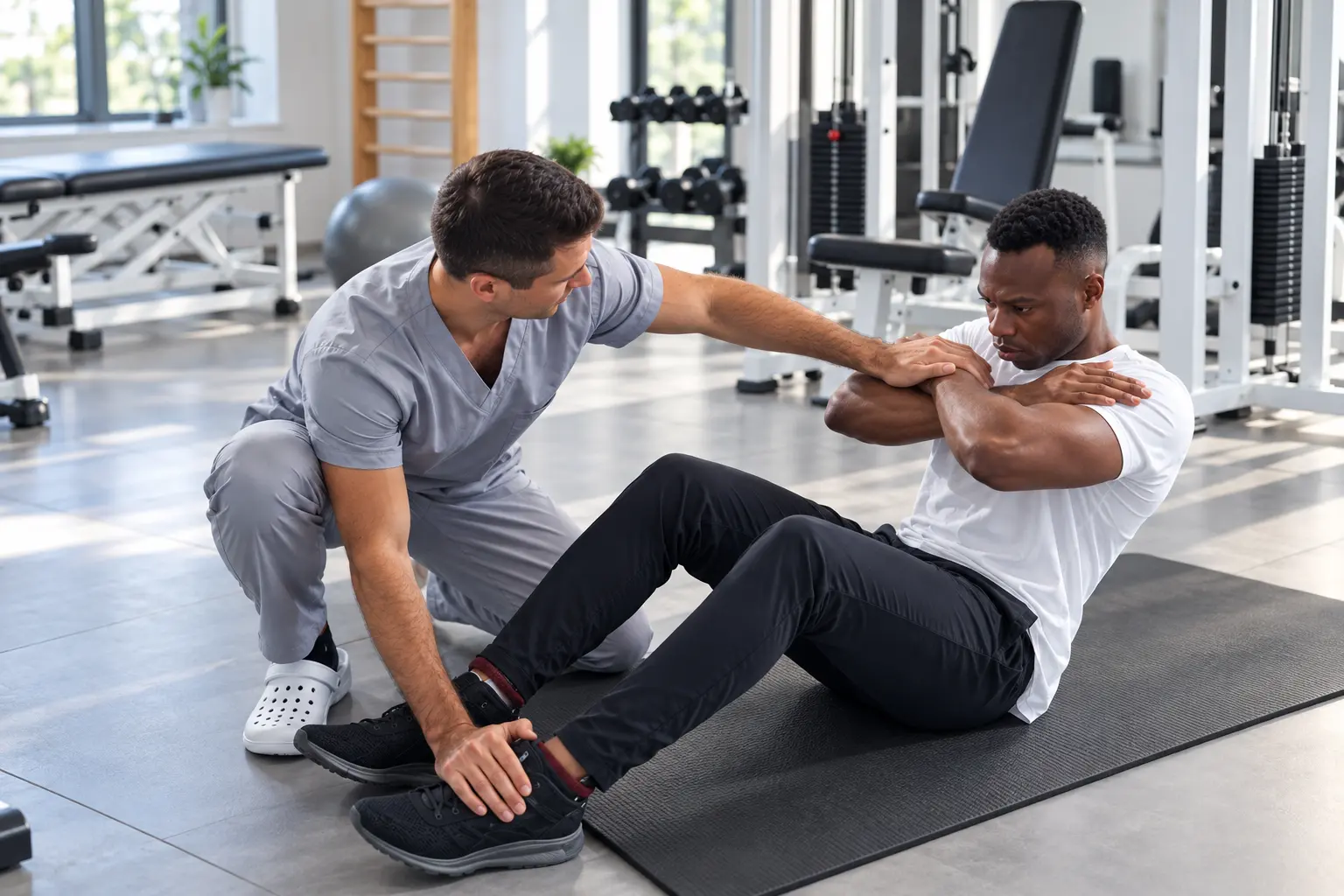
A Kinesiologist can help you rebuild strength and movement through an exercise program that reflects where you are now and what you want to get back to. At Zone 4, Kinesiology in North Vancouver can support recovery after an injury or car accident, as well as a safe return to exercise and everyday activities.
Your program takes into account your current strength, movement, symptoms, and previous injuries, and progresses as you improve rather than following the same routine from one session to the next.
What Is Kinesiology?
Kinesiology is the study of human movement and how the body responds to physical activity.
In a rehabilitation setting, a kinesiologist uses exercise, movement assessment, and progressive training to help people improve physical function and work toward specific goals.
Rather than relying mainly on hands-on treatment, kinesiology puts you in an active role.
That may include working on:
- ✔Balance
- ✔Strength
- ✔Mobility
- ✔Endurance
- ✔Coordination
- ✔Movement control
- ✔Confidence with exercise
- ✔Returning to daily or recreational activities
The exercises should match your current ability and become more challenging as you progress.
Who Can Benefit from Kinesiology?
You do not need to be an athlete or already feel comfortable in a gym to work with a kinesiologist.
Exercise rehabilitation can be adapted to different ages, activity levels, and stages of recovery.
Kinesiology may be worth considering if you are:
- ✔Returning to exercise after time away
- ✔Recovering from a muscle or joint injury
- ✔Returning to activity after a car accident
- ✔Working toward a return to sport or recreation
- ✔Building strength after a period of reduced activity
- ✔Finding certain daily activities more difficult than before
- ✔Dealing with weakness or reduced mobility after an injury
- ✔Looking for professional guidance with exercise during rehabilitation
Your starting point does not need to be perfect. The purpose of the assessment is to understand what you can comfortably do now and build from there.
Active Rehabilitation and Exercise Therapy
Active rehabilitation is an exercise-based approach that focuses on gradually restoring the physical abilities you need for everyday life.
Instead of giving everyone the same workout, your kinesiologist can choose exercises based on your movement, strength, symptoms, and goals.
Your program may include:
| Exercise Type | What It Focuses On |
|---|---|
| Mobility Exercises | These exercises focus on movements that feel limited, stiff, or difficult. The goal is to gradually make movement more comfortable and useful for daily activities. |
| Strength Training | Strength exercises can be introduced and progressed based on what you can safely manage. This may include bodyweight exercises, resistance bands, weights, or other equipment. |
| Balance and Stability | Balance and control can be important when returning to walking, work, sports, or activities that require changes in direction. Exercises can be adjusted as your confidence and ability improve. |
| Functional Exercise | Functional exercises are chosen around things you actually need or want to do. This may include stairs, lifting, carrying, bending, walking longer distances, returning to the gym, or getting back to recreational activities. The goal is to build skills and confidence that carry over into everyday life. |
Kinesiology After a Car Accident
A car accident can affect more than pain levels. It can also make people less confident with movement or leave them feeling weaker after a period of reduced activity.
Kinesiology is commonly used as part of active rehabilitation after a motor vehicle accident.
Depending on your needs, sessions may focus on:
- Improving mobility
- Rebuilding strength
- Returning to exercise
- Gradually increasing movement
- Increasing tolerance for everyday activities
- Working toward functional or return-to-work goals
If you have an active ICBC claim, have your claim number ready when contacting our clinic.
ICBC may provide coverage for kinesiology treatment for eligible claims. Our team can help you understand the booking process and what information is needed before your first appointment.
What to Expect at Your First Kinesiology Appointment
Your first session is about understanding where you are now and where you want to go.
| Step | What to Expect |
|---|---|
| 1. We Discuss Your Goals | Your kinesiologist will ask about the reason for your visit, your current symptoms, previous injuries, daily activities, and what you would like to get back to doing. For example, your goal may be returning to work, hiking again, getting back to the gym, or simply feeling stronger during everyday activities. |
| 2. We Look at How You Move | Depending on your needs, your kinesiologist may assess movements related to mobility, balance, strength, or the activities that are difficult for you. The assessment helps establish a starting point for your exercise program. |
| 3. You Start Moving | Your kinesiologist will guide you through exercises selected for your current level. They can demonstrate each exercise, adjust your technique, and change the difficulty when needed. |
| 4. Your Program Progresses With You | As your strength, movement, and confidence improve, your exercises can progress. The goal is to keep the program challenging enough to help you move forward without asking you to do more than you are ready for. |
Meet Your Kinesiologist
Ahmad Haghnegahdar
Kinesiology services at Zone 4 are provided by Ahmad Haghnegahdar.
Ahmad has a background in kinesiology and completed his studies at the University of British Columbia, with a focus on neuromechanical and physiological sciences.
His approach is centred on understanding each person’s goals and using evidence-informed exercise and movement strategies to support their progress.
Areas of interest include:
- Active rehabilitation
- Range of motion
- Strength and muscle function
- Balance and stability
- Body awareness
- Movement quality
- Exercise-based injury recovery
Treatment is adapted to your current abilities rather than expecting you to fit into a standard exercise program.
Kinesiology and Physiotherapy: What Is the Difference?
Kinesiology and physiotherapy can both be part of rehabilitation, but they are not the same service.
A physiotherapist can assess injuries and may use hands-on treatment, exercise, education, and other clinical techniques.
Kinesiology tends to place more emphasis on active exercise, conditioning, functional movement, and gradually building your physical capacity.
Some recovery plans begin with physiotherapy and later place more emphasis on active exercise. When that makes sense, our physiotherapy in North Vancouver team and kinesiologist can work toward the same recovery goals.
You may only need one service, or a combination may be recommended depending on your situation.
Kinesiology vs. Personal Training
Both can involve exercise, but the goals may be different.
Personal training is commonly focused on general fitness, strength, conditioning, or performance.
Kinesiology may be a better starting point when exercise needs to account for an injury, physical limitation, rehabilitation goal, or return to activity.
If you are unsure which service is the better fit, our team can help point you in the right direction before you book.
Book a Kinesiology Appointment
If an injury, car accident, or period of reduced activity has made it harder to move or exercise with confidence, guided rehabilitation can give you a clearer way forward.
At Zone 4, your kinesiology program is built around your abilities and the activities that matter to you.
North Vancouver, BC V7M 1T3
Frequently Asked Questions
Do I need to be physically fit to start kinesiology?
No. Your exercise program is based on your current abilities, symptoms, and goals. Exercises can start at an appropriate level and progress gradually as your strength, movement, and confidence improve.
How many kinesiology sessions will I need?
There is no standard number of sessions for everyone. The frequency and duration of your program depend on your starting point, rehabilitation goals, progress, and the activities you want to return to.